Donna's Boutique
A local women’s fashion boutique known for its trend-led collections and strong in-store customer experience. To match their in-store experience, Donna’s Boutique needed a revamp so that users could trust the site and purchase items confidently online.
Type
Concept
Project
Solo Project
Role
UX Designer
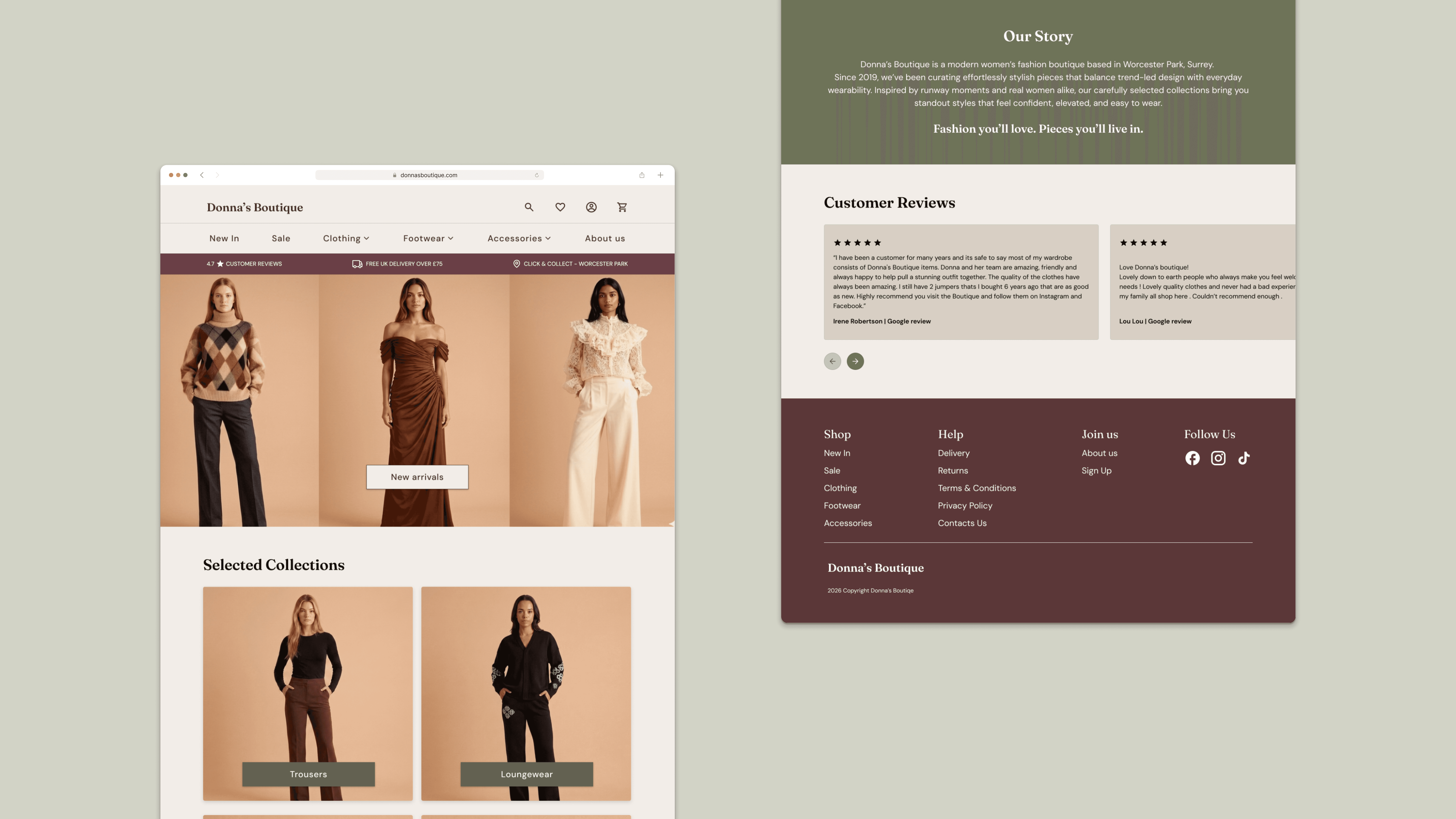
Reimagining a women’s boutique
Overview
Challenge
As part of the GA x Adobe Scholarship Programme, this project was a class brief on improving information architecture and usability with the intention to redesign and rebrand a local e-commerce business with curated inventory so that their products are showcased while maintaining their “small shop” appeal and great customer service.
Solution
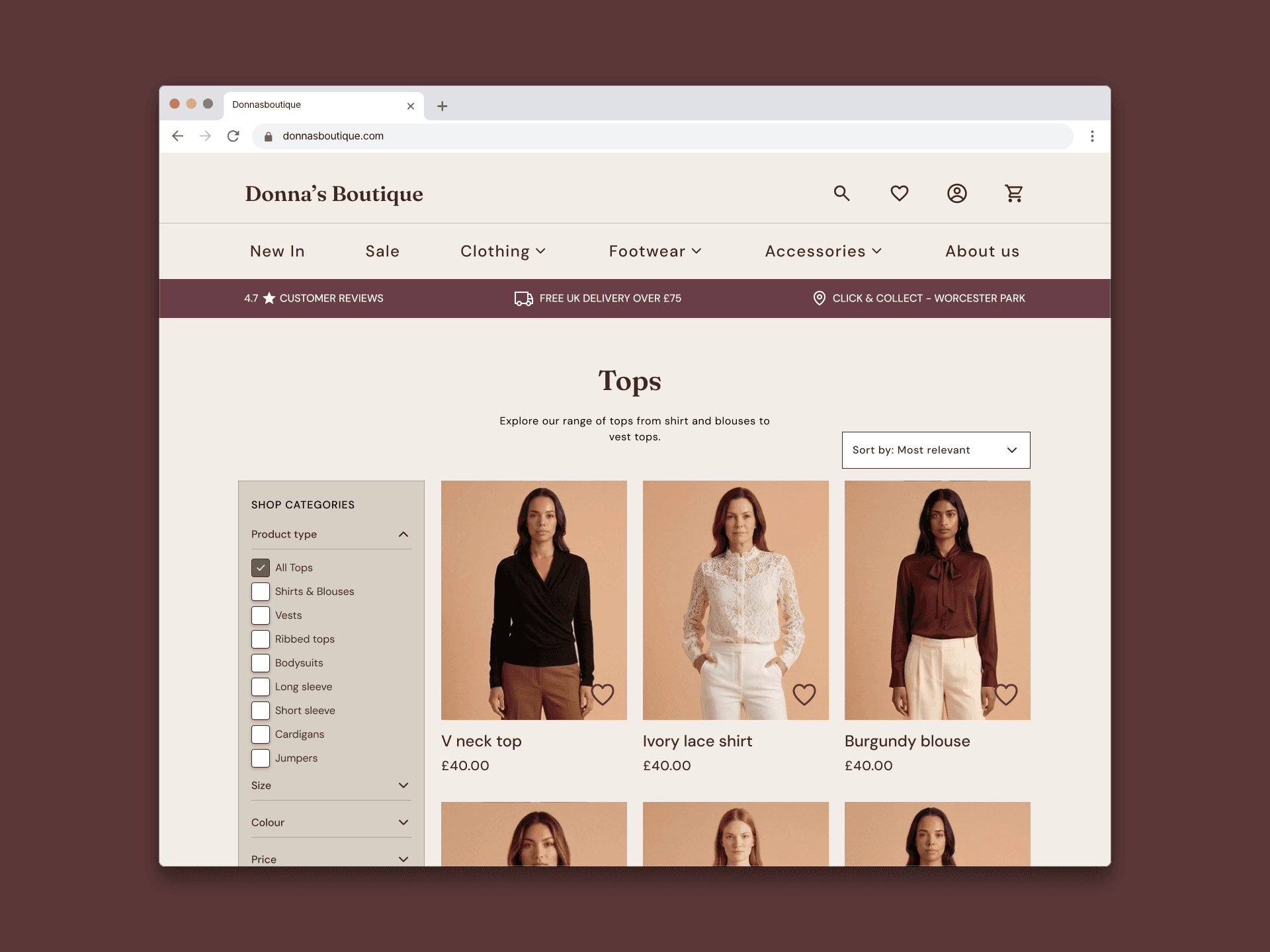
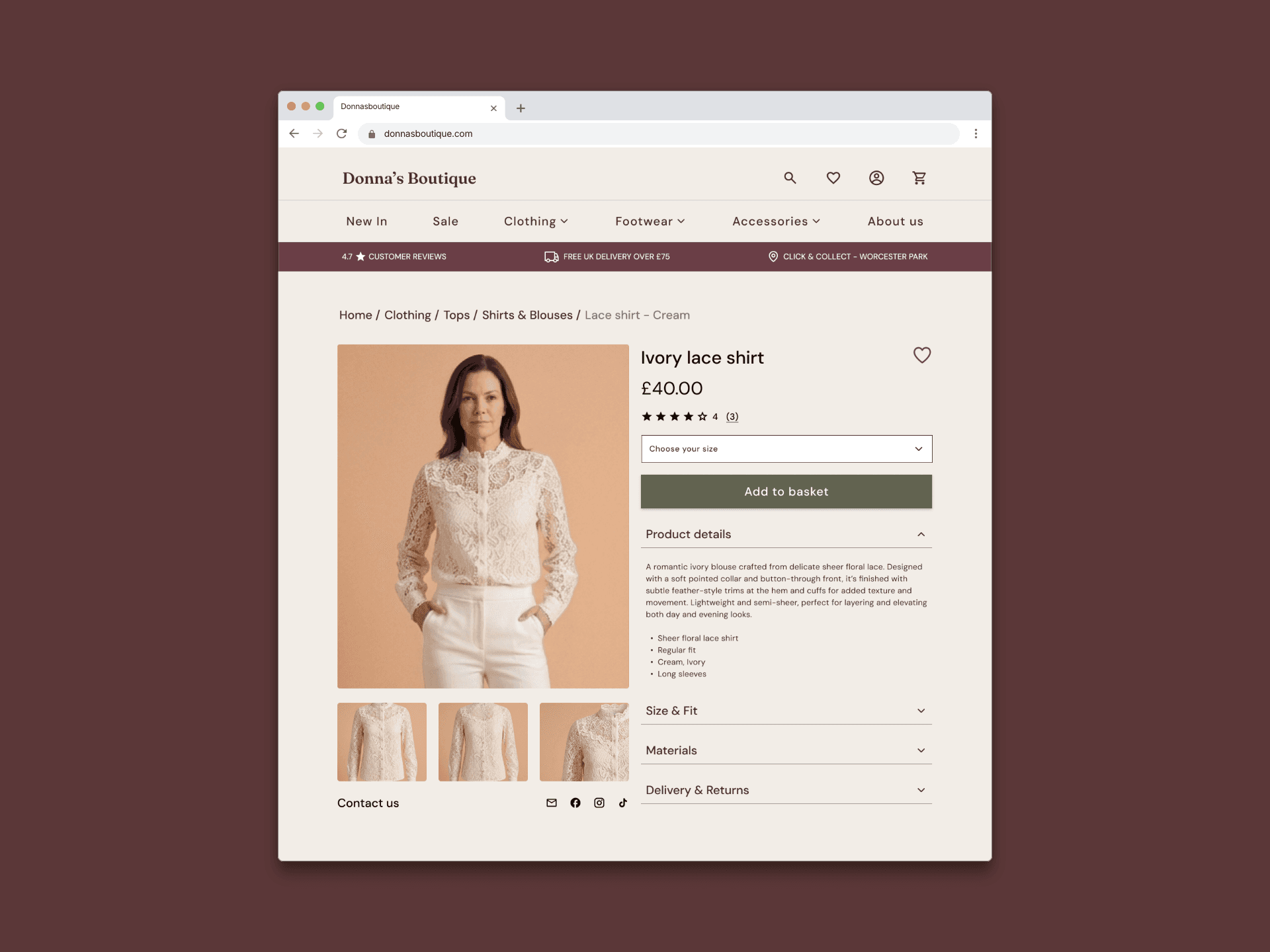
I redesigned the website experience to improve product discovery, increase purchase confidence, and create a more trustworthy shopping experience by adding clear product & delivery information, filtering options, and building stronger trust signals with visuals.
My Role
I was the sole designer on this project and conducted and synthesised research and testing on the existing site, ideated design solutions and information architecture before creating and testing a prototype.

01 Discover
Understand and uncover
Three methods, one clear picture of where trust was breaking.
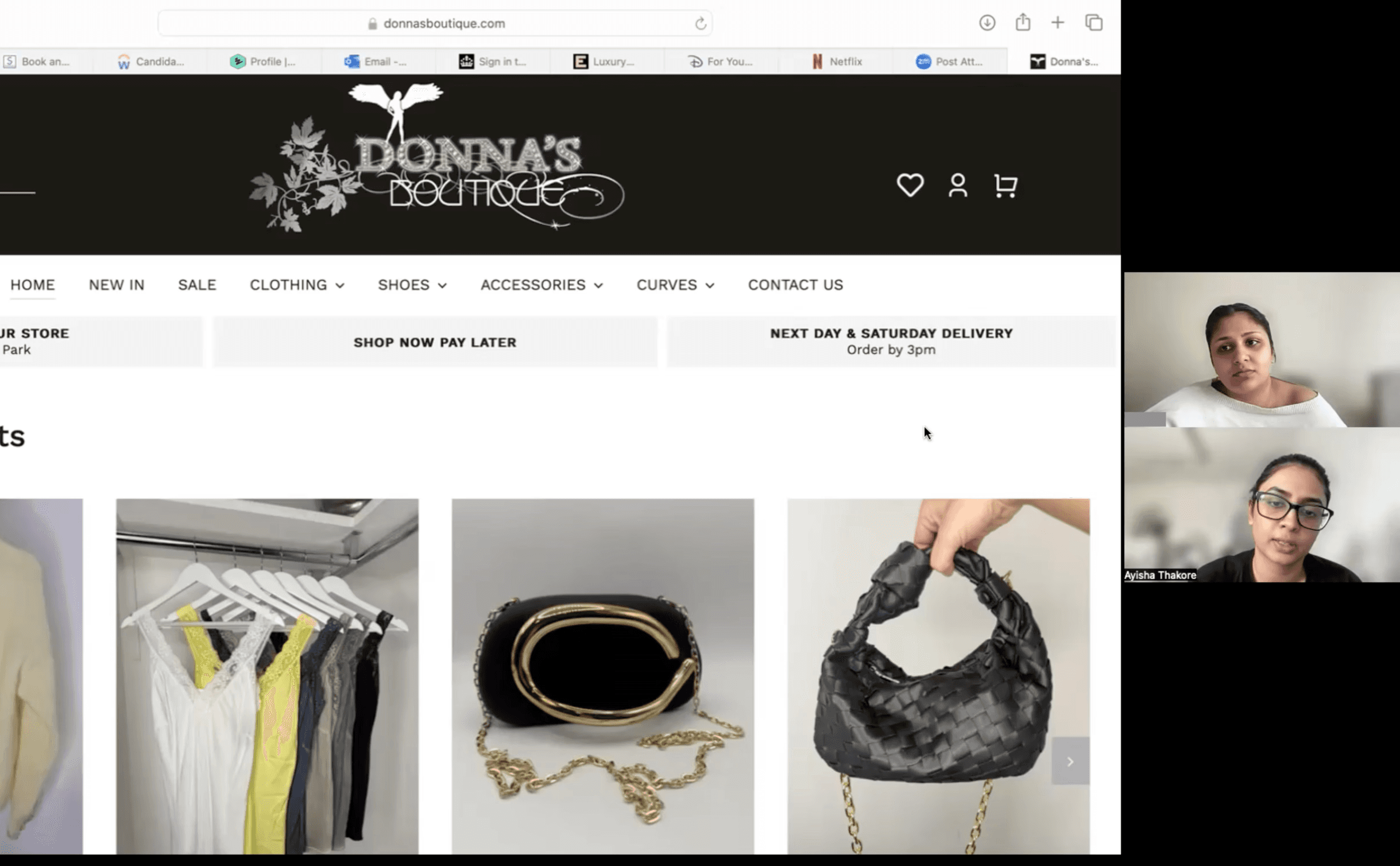
To understand where the existing site was losing potential users, I ran a combination of moderated usability testing and interviews with 4 participants (women who were online shoppers aged 25–50), a competitor analysis against Feather & Stitch and H&M to benchmark what was missing, and a heuristic evaluation using Nielsen's 10 to flag usability and cognitive-load issues. A SUS survey gave me a quantitative baseline to measure against later.
01
Navigation worked, but discovery was slow.
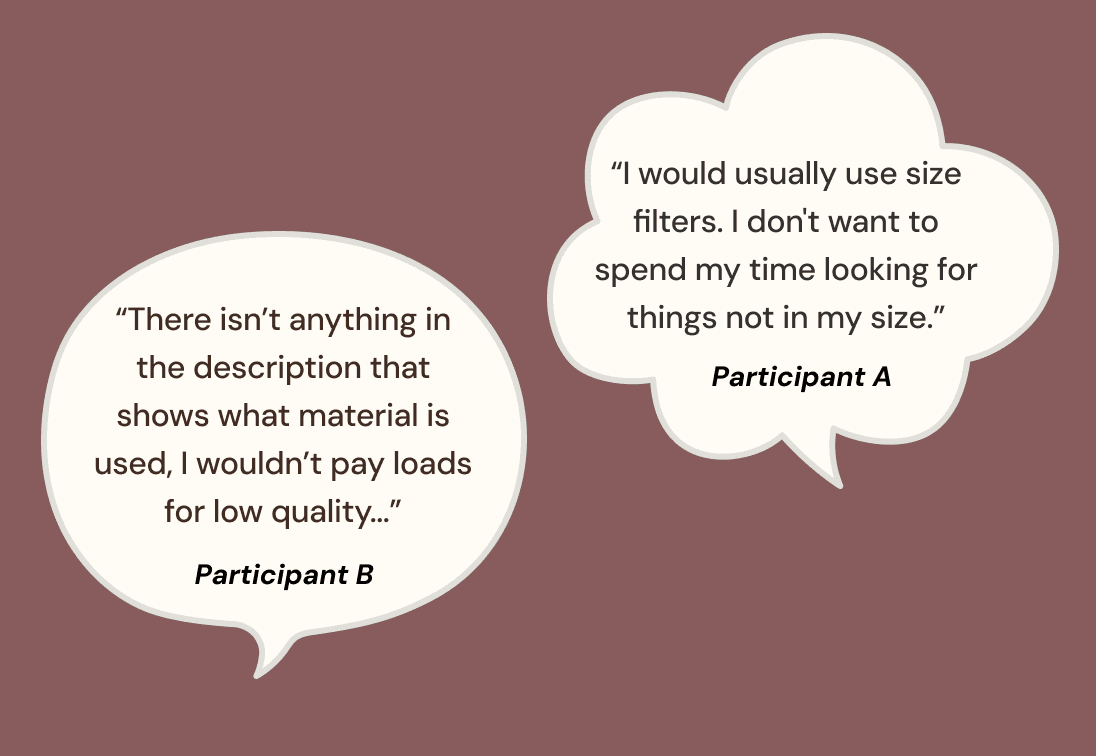
All users could find products, but narrowing them down felt effortful. Key filtering options like size and materials were standard on competitor sites but missing here, and the existing "product type" filter just mirrored the global navigation rather than offering granular options.
The heuristic evaluation flagged two more issues. Adding an item to basket auto-redirected users to the cart, taking control away mid-browse, and the "Curves" page in the global nav was just repeated inventory rather than plus-size only options.
02
Missing product information caused hesitation.
The site offered no sizing guides, material details, or upfront delivery information, so none of the users felt confident buying. They couldn't gauge how an item would fit or the quality of what they were paying for.
The heuristic evaluation showed delivery timelines, fees, and returns were buried in a footer policy page, forcing users to navigate away from the main flow and try to recall everything at checkout. Competitors surfaced this information at every stage.

03
Weak visual cues reduced trust.
100% of users described the site as dated and none were fond of the current logo, branding and product images. Competitors had higher quality images on consistent neutral backgrounds and product reviews which helped build a stronger, more trusted brand.
Carrying findings forward to define.
With an average SUS score of 61 sitting below the 68 industry average, the direction was clear. I carried the three insights into Define to shape a persona, problem statement, and ‘how we might we’ statement.
01 Discover
Understand and uncover
Three methods, one clear picture of where trust was breaking.
To understand where the existing site was losing potential users, I ran a combination of moderated usability testing and interviews with 4 participants (women who were online shoppers aged 25–50), a competitor analysis against Feather & Stitch and H&M to benchmark what was missing, and a heuristic evaluation using Nielsen's 10 to flag usability and cognitive-load issues. A SUS survey gave me a quantitative baseline to measure against later.
01
Navigation worked, but discovery was slow.
All users could find products, but narrowing them down felt effortful. Key filtering options like size and materials were standard on competitor sites but missing here, and the existing "product type" filter just mirrored the global navigation rather than offering granular options.
The heuristic evaluation flagged two more issues. Adding an item to basket auto-redirected users to the cart, taking control away mid-browse, and the "Curves" page in the global nav was just repeated inventory rather than plus-size only options.
02
Missing product information caused hesitation.
The site offered no sizing guides, material details, or upfront delivery information, so none of the users felt confident buying. They couldn't gauge how an item would fit or the quality of what they were paying for.
The heuristic evaluation showed why. Delivery timelines, fees, and returns were buried in a footer policy page, forcing users to navigate away from the main flow and try to recall everything at checkout. Competitors surfaced this information at every stage.
03
Weak visual cues reduced trust.
100% of users described the site as dated and none were fond of the current logo, branding and product images. Competitors had higher quality images on consistent neutral backgrounds and product reviews which helped build a stronger, more trusted brand.
Carrying findings forward to define.
With an average SUS score of 61 sitting below the 68 industry average, the direction was clear. I carried the three insights into Define to shape a persona, problem statement, and ‘how we might we’ statement.
02 Define
Focus and frame
Meet Rita.
After using AI as a tool to draw out key insights, I synthesised my research into one persona, problem and ‘how might we’ statement.
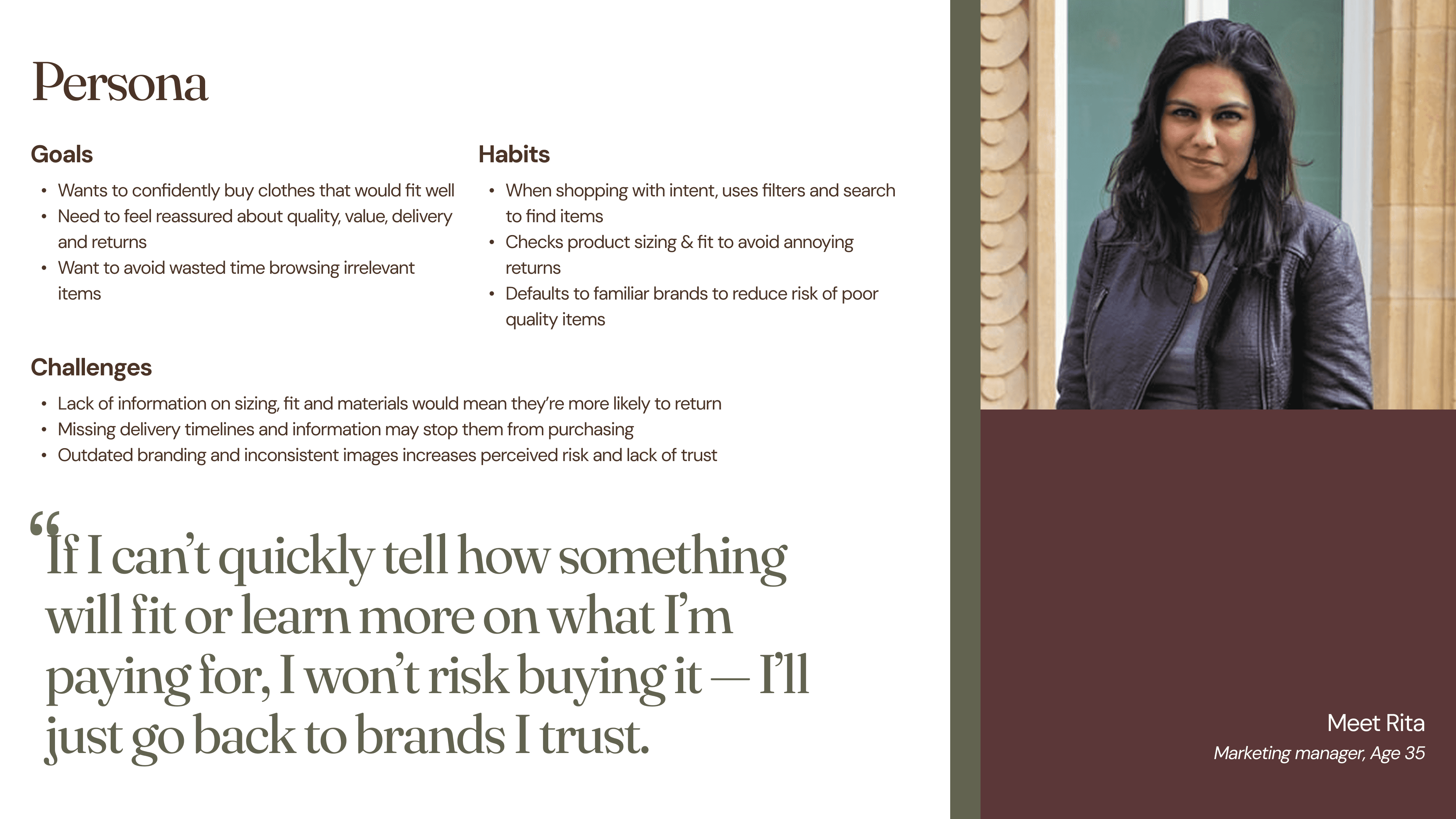
Rita is a frequent online shopper who wants to quickly find relevant items with clear product and delivery information so she can confidently purchase items, but missing product & delivery information and weak visual cues create uncertainty around fit, quality, and value.
Success meant less hesitation and a SUS above 68.
For Rita, success meant finding sizing, materials and delivery information without leaving the main flow, so she could go from "I might buy this" to "I'm buying this" without doubting her way back to brands she trusted. For the boutique and site, it meant fewer drop-offs at the product page and clearing the 68 industry benchmark.
Exploring opportunities to help Rita.
After creating a core problem statement I explored several HMW statements before landing on one to carry through to ideation.

02 Define
Focus and frame
Meet Rita.
After using AI as a tool to draw out key insights, I synthesised my research into one persona, problem and ‘how might we’ statement.
Rita is a frequent online shopper who wants to quickly find relevant items with clear product and delivery information so she can confidently purchase items, but missing product & delivery information and weak visual cues create uncertainty around fit, quality, and value.
Success meant less hesitation and a SUS above 68.
For Rita, success meant finding sizing, materials and delivery information without leaving the main flow, so she could go from "I might buy this" to "I'm buying this" without doubting her way back to brands she trusted. For the boutique and site, it meant fewer drop-offs at the product page and clearing the 68 industry benchmark.
Exploring opportunities to help Rita.
After creating a core problem statement I explored several HMW statements before landing on one to carry through to ideation.
03 Develop
Ideate and iterate
Improving navigation with a card sort.
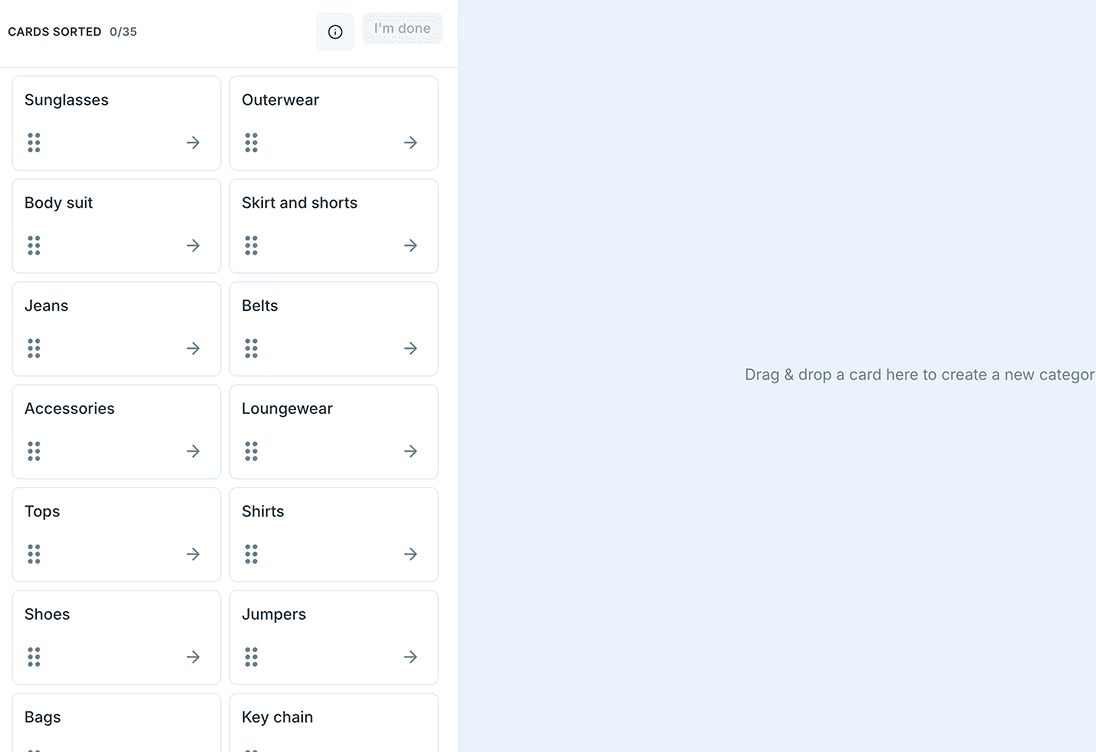
I conducted a virtual open card sort with 6 participants to understand customer mental models on Donna’s current content and to test the ‘Curves’ page from my initial analysis so that I could improve the website's current structure.
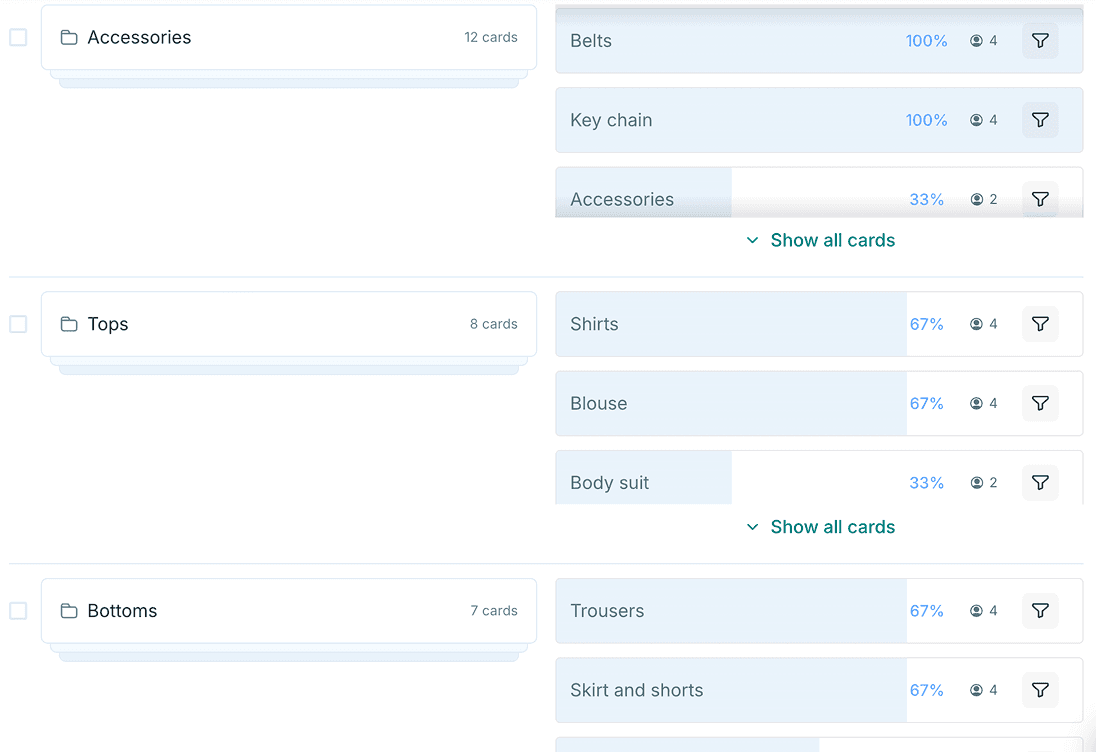
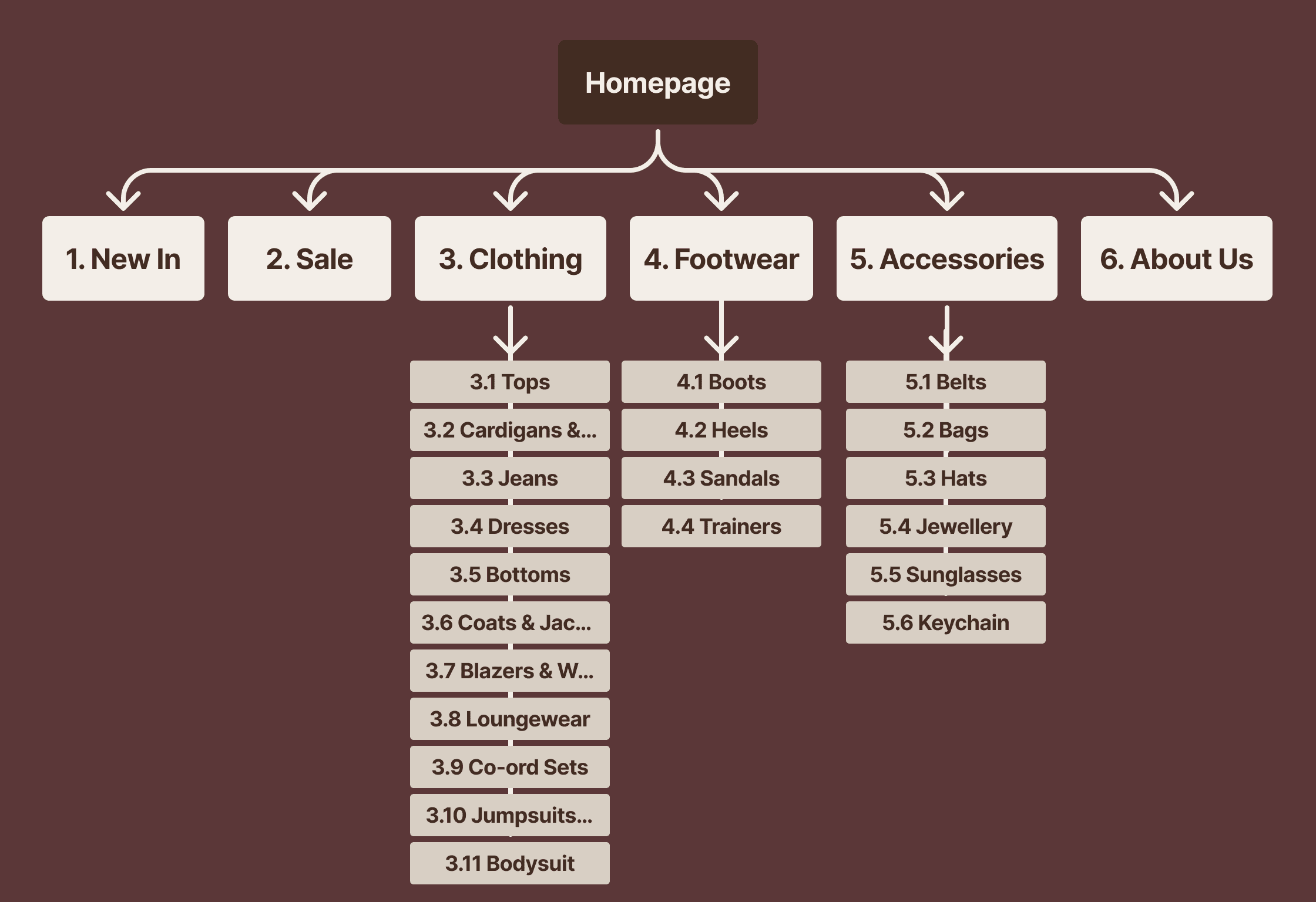
Popular categories based on how users browse.
I sequenced all the participants groupings and compared them against competitors to create an ideal layout of Donna Boutique’s new sitemap.
Modern refresh with a small brand feel.
Refreshing Donna Boutique's visual identity was an extremely fun process. To reflect the trend-led fashion pieces and to keep the approachable feel I went for an elevated and warm look to communicate quality and trust. Colour contrast and typography were also tested against WCAG accessibility guidelines to ensure the site remained accessible to all users.

From sketches to a mid-fi prototype.
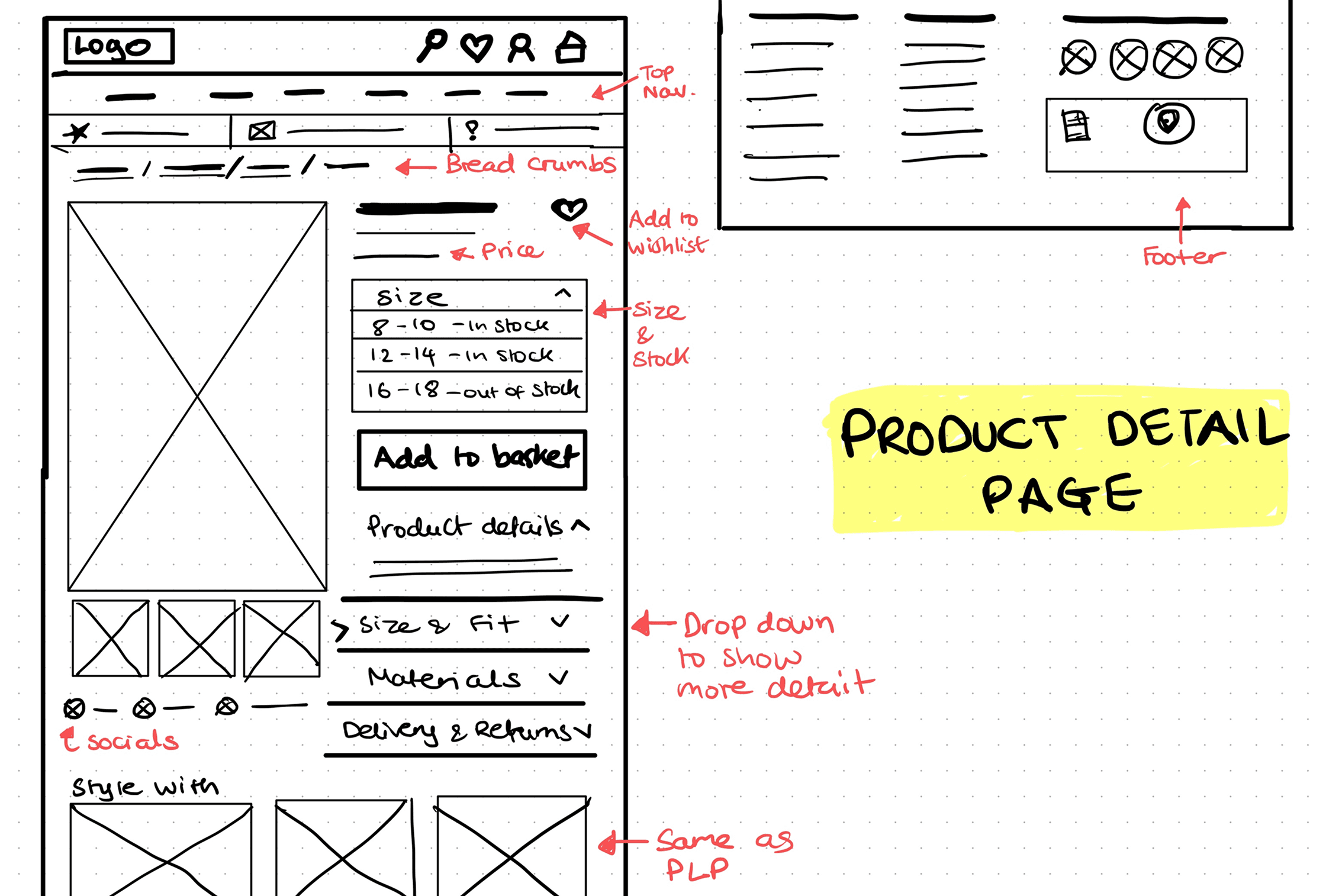
From my research I prioritised the improvements I wanted to make and created lo-fi wireframes for the Home page, Product listing page, Product detail page and Checkout pages. Each page kept a similar layout to the existing site but had the following key changes:
01
Clearer product and delivery information
Product pages now included drop downs on sizing & fit, materials, delivery and returns. Free delivery information was moved from the footer to a top banner.
02
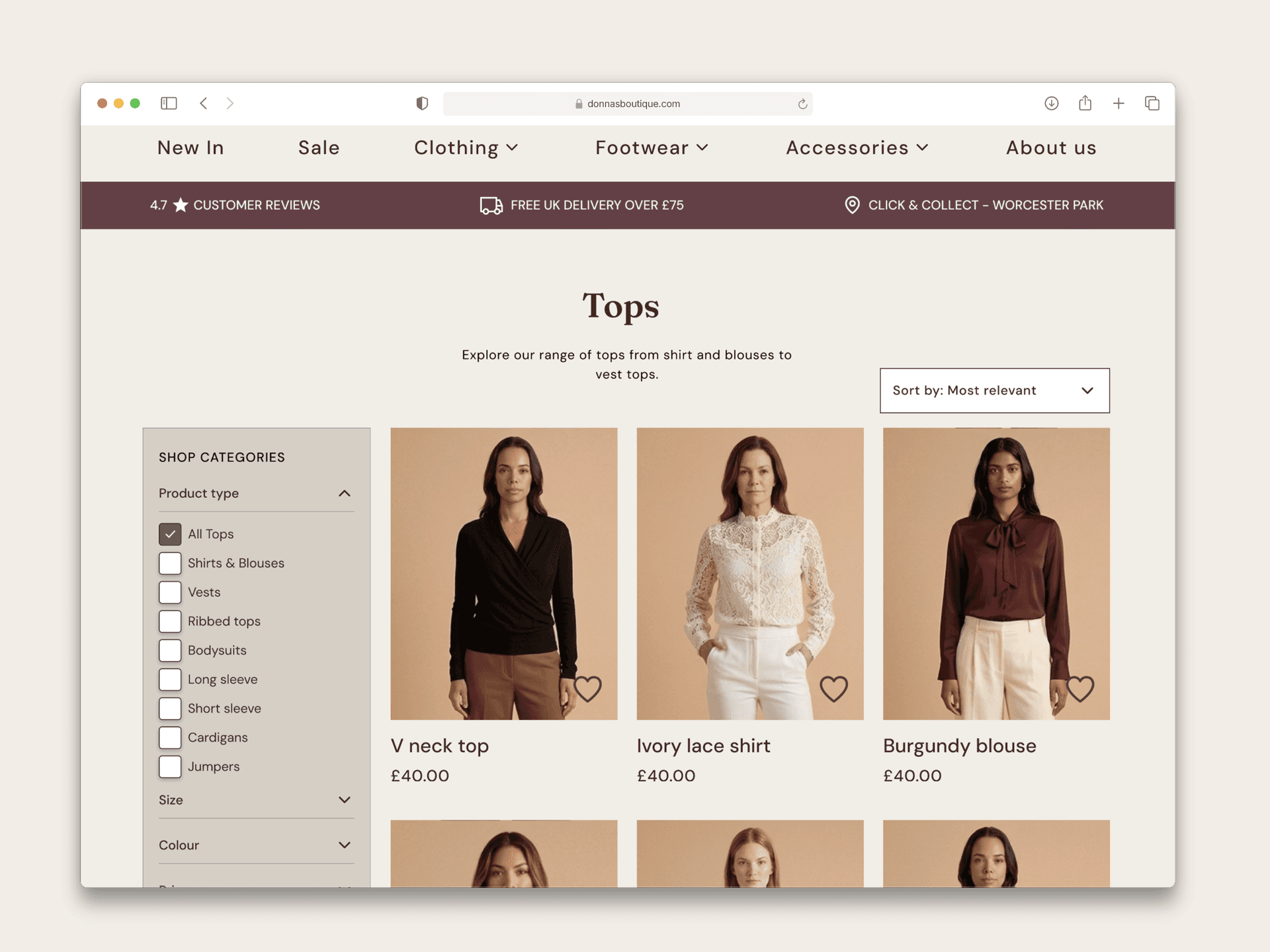
More granular filter options
Additional filters meant moving its location and making them expandable, which was common in competitors.
03
Simplified checkout flow experience
Confusing buttons such as “Update totals” were removed to reduce friction during checkout.
04
Stronger trust signals
Customer reviews on the store were added to the home page and top banner to increase trust along with improved visuals and brand.
Users purchased confidently in testing.
I conducted moderated testing on the mid-fi prototype and SUS surveys with 3 participants to evaluate whether the changes improved user confidence and usability.
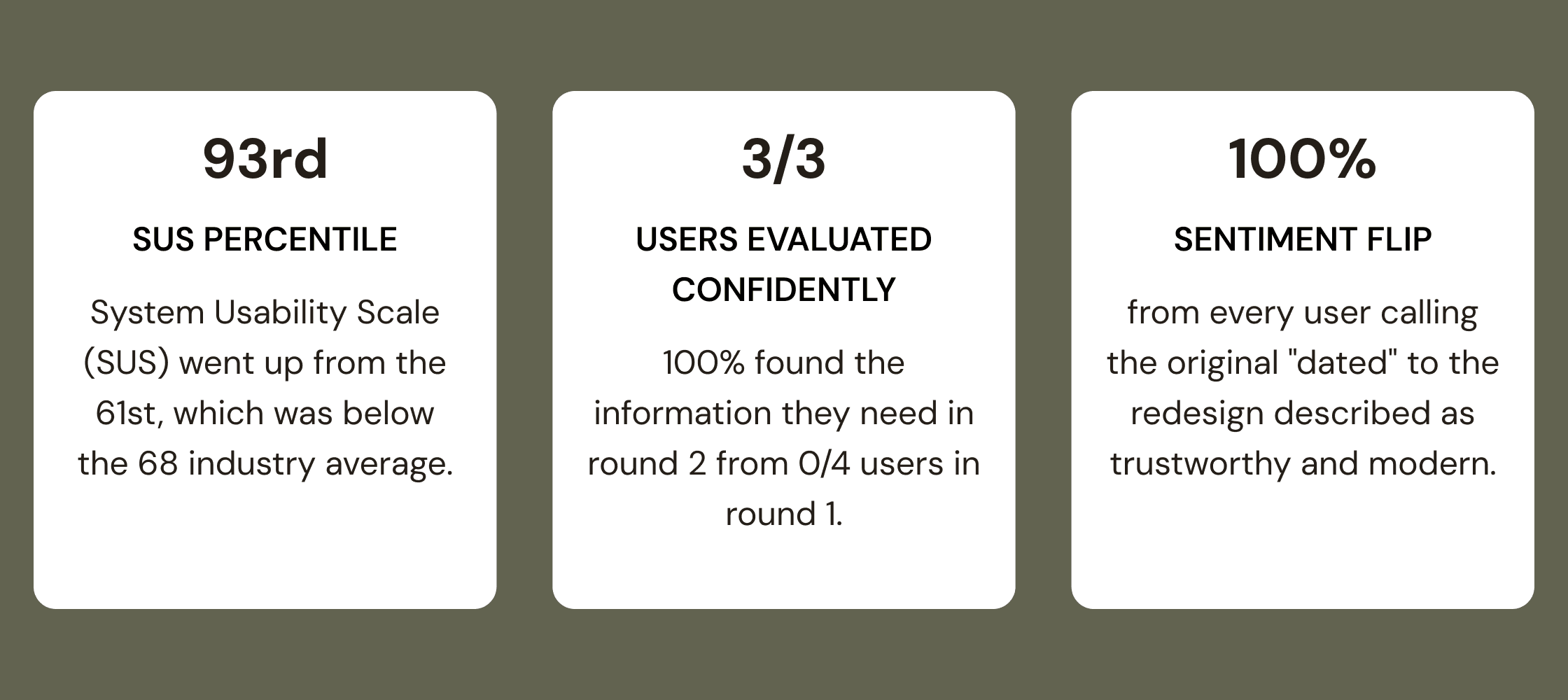
3/3 users
filtered items down quickly and easily found product & delivery information to confidently purchase items.
93rd percentile.
SUS score increased from 61 which was below average.
Increase in trust.
Users found the new branding professional and modern, and felt more confident in the site overall. They still wanted reviews on each product page, not just the homepage, so they could gauge fit and quality from other buyers.
03 Develop
Ideate and iterate
Improving navigation with a card sort.
I conducted a virtual open card sort with 6 participants to understand customer mental models on Donna’s current content and to test the ‘Curves’ page from my initial analysis so that I could improve the website's current structure.
Popular categories based on how users browse.
I sequenced all the participants groupings and compared them against competitors to create an ideal layout of Donna Boutique’s new sitemap.
Modern refresh with a small brand feel.
Refreshing Donna Boutique's visual identity was an extremely fun process. To reflect the trend-led fashion pieces and to keep the approachable feel I went for an elevated and warm look to communicate quality and trust. Colour contrast and typography were also tested against WCAG accessibility guidelines to ensure the site remained accessible to all users.
From sketches to a mid-fi prototype.
From my research I prioritised the improvements I wanted to make and created lo-fi wireframes for the Home page, Product listing page, Product detail page and Checkout pages. Each page kept a similar layout to the existing site but had the following key changes:
01
Clearer product and delivery information
Product pages now included drop downs on sizing & fit, materials, delivery and returns. Free delivery information was moved from the footer to a top banner.
02
More granular filter options
Additional filters meant moving its location and making them expandable, which was common in competitors.
03
Simplified checkout flow experience
Confusing buttons such as “Update totals” were removed to reduce friction during checkout.
04
Stronger trust signals
Customer reviews on the store were added to the home page and top banner to increase trust along with improved visuals and brand.
Users purchased confidently in testing.
I conducted moderated testing on the mid-fi prototype and SUS surveys with 3 participants to evaluate whether the changes improved user confidence and usability.
3/3 users
filtered items down quickly and easily found product & delivery information to confidently purchase items.
93rd percentile.
SUS score increased from 61 which was below average.
Increase in trust.
Users found the new branding professional and modern, and felt more confident in the site overall. They still wanted reviews on each product page, not just the homepage, so they could gauge fit and quality from other buyers.
04 Deliver
Ship and measure
From mid-fi to hi-fi with two final changes.
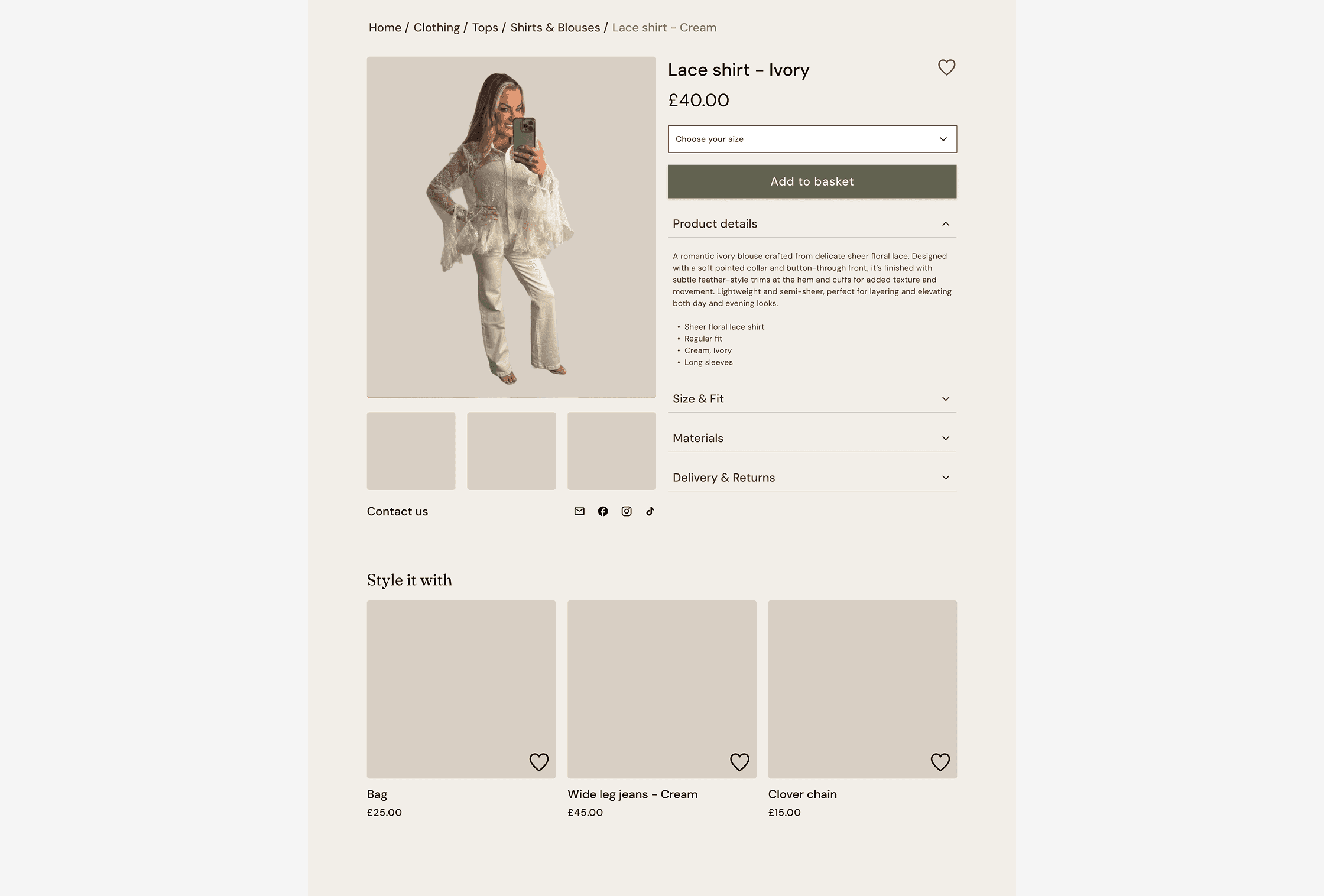
After usability testing I made two more changes in the hi-fi prototype. I created customer reviews in the product detail page, where testers wanted them at the point of decision rather than only the homepage. I also separated and clarified the delivery options in the cart, splitting standard, next-day and click & collect with proper timelines.
AI generated consistent imagery.
For the hi-fi product imagery, I used Google Gemini as a creative aid to address inconsistent photography which was a trust issue flagged in my research. Using reference images from the existing site alongside my new brand colours, I prompted for neutral, consistent backgrounds that would complement the design direction. After several rounds of iteration and curation against my research criteria, I applied the same approach with the remaining product images.
SUS jumped from the 61st to the 93rd percentile.
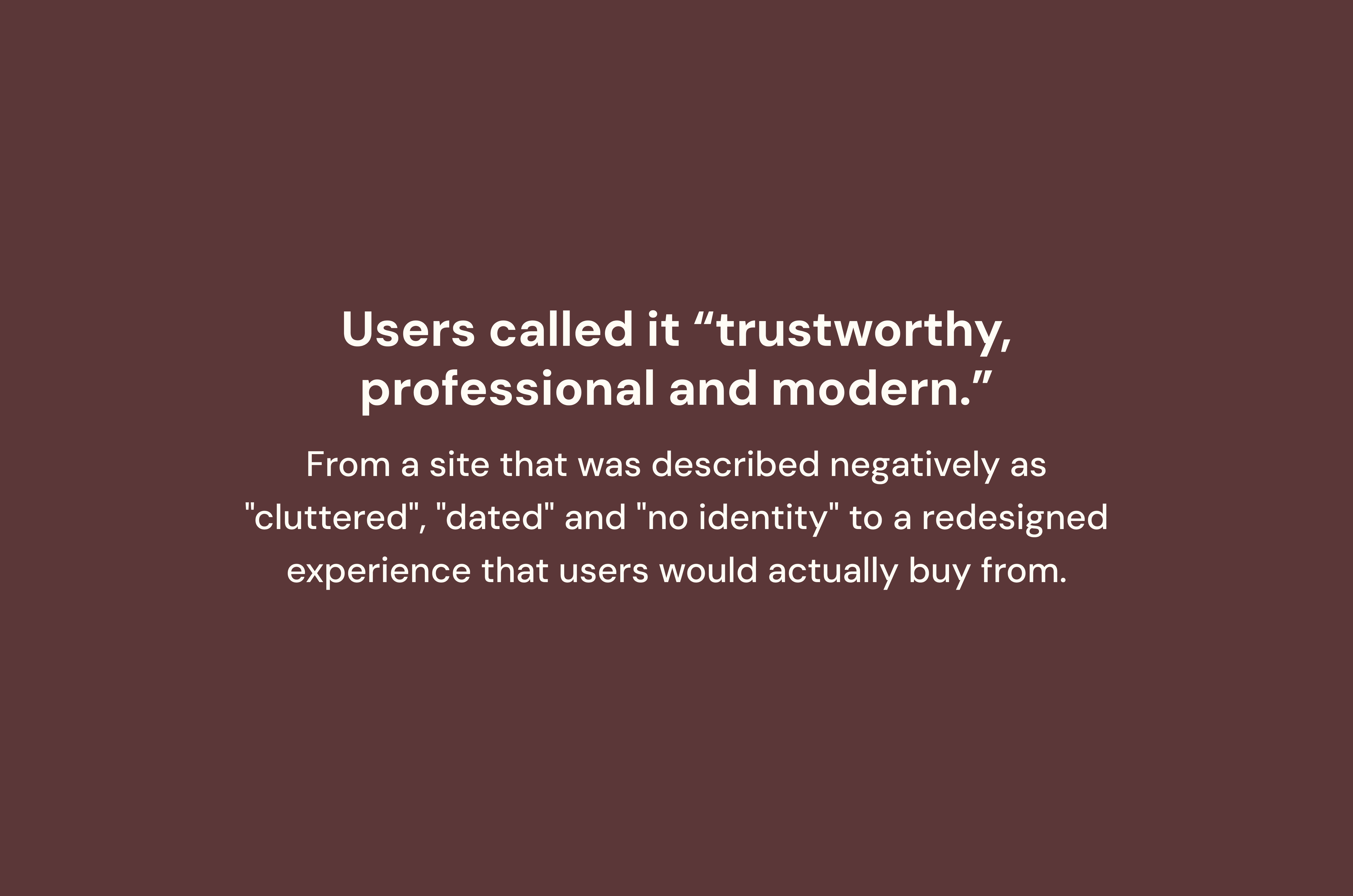
The redesign lifted the SUS score by 32 points, well past the 68 industry benchmark. From the 0/4 in round 1 testing to 3/3 in round 2, users found the product, sizing, delivery and returns information they needed to confidently purchase.
How I answered the brief.
The redesigned experience gave Donna's products the same trust and care the in-store experience already had. Users could find pieces faster with stronger filters, understand fit and quality with sizing and materials information on every product, and check out with clear delivery options. They could buy online with the same confidence they'd have walking into the store.
04 Deliver
Ship and measure
From mid-fi to hi-fi with two final changes.
After usability testing I made two more changes in the hi-fi prototype. I created customer reviews in the product detail page, where testers wanted them at the point of decision rather than only the homepage. I also separated and clarified the delivery options in the cart, splitting standard, next-day and click & collect with proper timelines.
AI generated consistent imagery.
For the hi-fi product imagery, I used Google Gemini as a creative aid to address inconsistent photography which was a trust issue flagged in my research. Using reference images from the existing site alongside my new brand colours, I prompted for neutral, consistent backgrounds that would complement the design direction. After several rounds of iteration and curation against my research criteria, I applied the same approach with the remaining product images.
SUS jumped from the 61st to the 93rd percentile.
The redesign lifted the SUS score by 32 points, well past the 68 industry benchmark. From the 0/4 in round 1 testing to 3/3 in round 2, users found the product, sizing, delivery and returns information they needed to confidently purchase.
How I answered the brief.
The redesigned experience gave Donna's products the same trust and care the in-store experience already had. Users could find pieces faster with stronger filters, understand fit and quality with sizing and materials information on every product, and check out with clear delivery options. They could buy online with the same confidence they'd have walking into the store.
Next steps
01
Customer review photo’s
Build an option for customers to add photos to their reviews as users wanted to see how items fit on others and how they have received them.
02
Further testing
I would conduct further testing on the hi-fi prototype to verify my previous insights and the iterations i’ve made.
03
Build on 'Product type' filter
Breaking down product type into more granular options for other items across the site.
Next steps
01
Customer review photo’s
Build an option for customers to add photos to their reviews as users wanted to see how items fit on others and how they have received them.
02
Further testing
I would conduct further testing on the hi-fi prototype to verify my previous insights and the iterations i’ve made.
03
Build on 'Product type' filter
Breaking down product type into more granular options for other items across the site.
Key Learnings
Going solo meant owning the trade-offs.
Without a team to bounce decisions off, I had to be deliberate about scoping and prioritising changes with the most impact in a 3-week sprint and parking ones I'd come back to. One persona and one HMW kept me focused, but I missed exploring strategy and ideas with others.
Why this project stuck with me.
This experience taught me how a few clear product details and strong visual branding can make the difference between a curious browser and a confident buyer. The bridge between in-store warmth and online trust is something I'll keep coming back to in future projects.
Key Learnings
Going solo meant owning the trade-offs.
Without a team to bounce decisions off, I had to be deliberate about scoping and prioritising changes with the most impact in a 3-week sprint and parking ones I'd come back to. One persona and one HMW kept me focused, but I missed exploring strategy and ideas with others.
Why this project stuck with me.
This experience taught me how a few clear product details and strong visual branding can make the difference between a curious browser and a confident buyer. The bridge between in-store warmth and online trust is something I'll keep coming back to in future projects.